

Strengthening
Care Systems:
Driving sustainable change across the lung cancer care continuum.
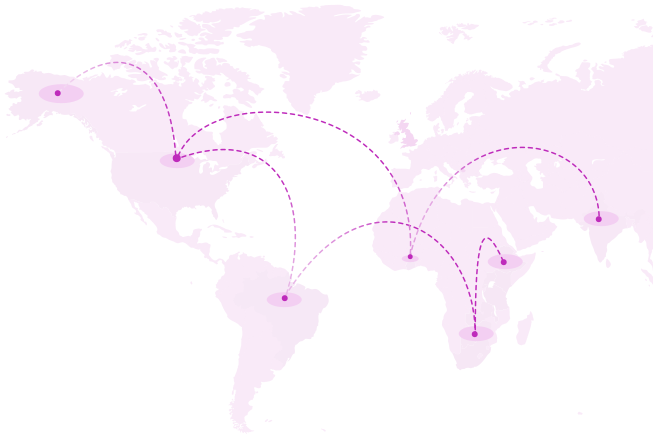

Lung cancer remains one of the world's most complex and devastating health challenges, and there's an urgent need for concerted action to address its growing impact, particularly in medically underserved and resource-limited settings.
Leading organizations are working to bring tangible solutions to this fight.


Growing burden



Globally, lung cancer is the leading cause of cancer death, responsible for killing an estimated 1.8 million people in 2022 alone.
Source: World Health Organization

How can lung cancer screening in India reflect risk beyond smoking?
Opinion: Current lung cancer screening policy leaves gaps around air pollution, exposure, and genetics. Two new trials in India are creating the localized evidence needed to build a screening policy tailored to a true at-risk profile.
Lung cancer: The global funding gap we can no longer ignore
Lung cancer is the leading cause of cancer death worldwide — killing more people annually than breast, prostate, and colorectal cancers combined. Despite this, it remains a disproportionately underfunded...
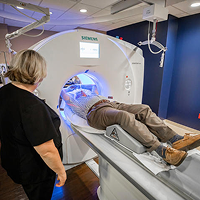
Markey researchers awarded $6.8 million to help others replicate Kentucky's lung cancer screening success
A groundbreaking lung cancer screening project co-led by the University of Kentucky Markey Cancer Center and the University of Colorado (CU) Cancer Center is set to expand its reach, thanks to a $6.8 million grant from the Bristol Myers Squibb Foundation, an independent charitable organization.
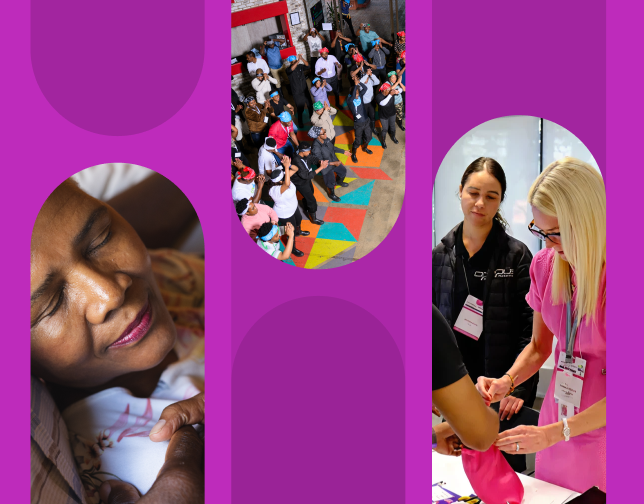
Lung cancer continues to be the number one cancer killer and, at this point, there's really no excuse for it to not be a major initiative for all nations on the planet.

Capacity Building
Early detection can increase a patient's chance of surviving for five years from 4% to 55%.
Source: Cancer immunology, immunotherapy : CII vol. 67,7



Partnerships

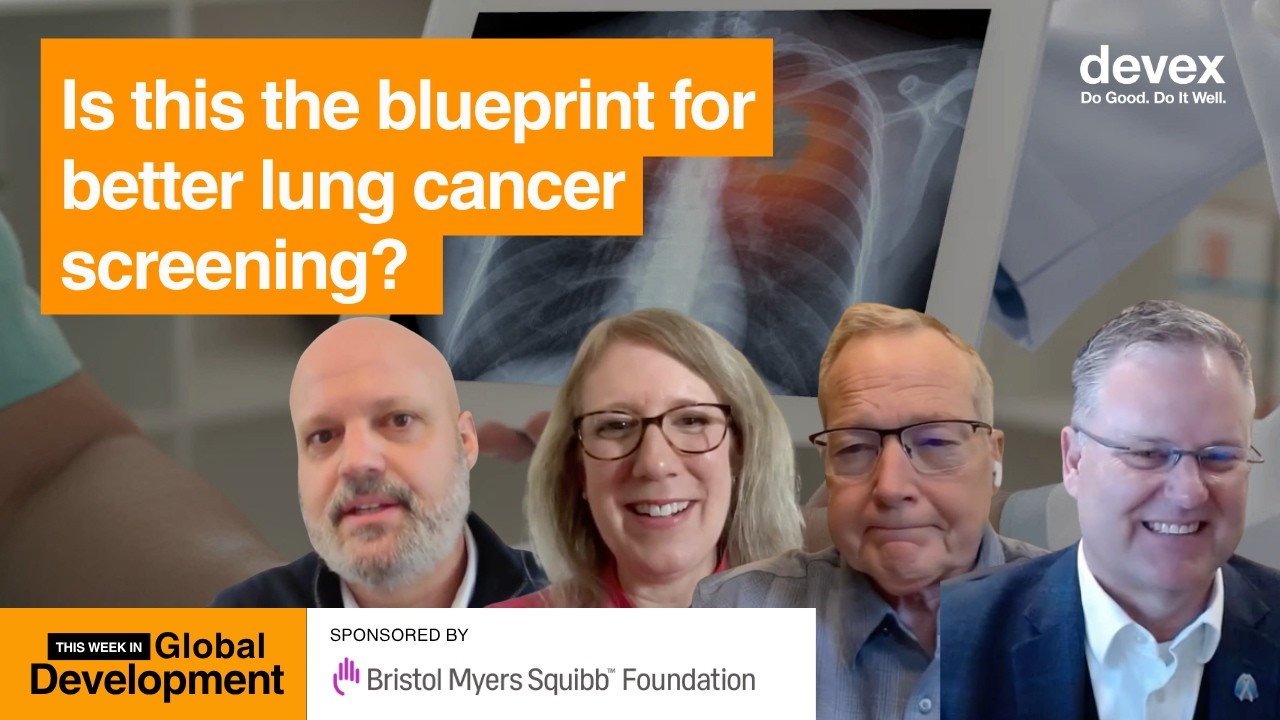
Leveraging Brazil’s health networks for early lung cancer detection
Helen McGuire and Camilo Manchola discuss advancing lung cancer care by leveraging Brazil's existing tuberculosis platforms, proving the power of integrated, human-centered systems to stretch resources and improve patient outcomes.
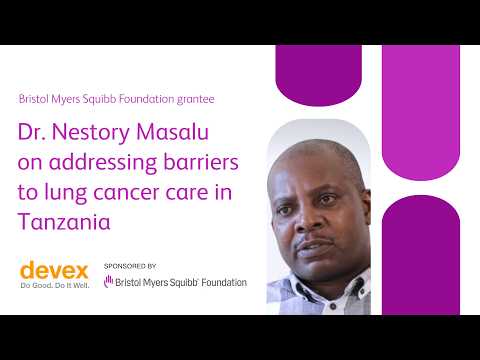
Transforming Lung Cancer Care & Early Detection in Tanzania
Lung cancer remains the leading cause of cancer death worldwide, yet patients in resource-limited settings face severe barriers to early diagnosis. This video explores efforts to strengthen lung cancer care and early detection in Tanzania.
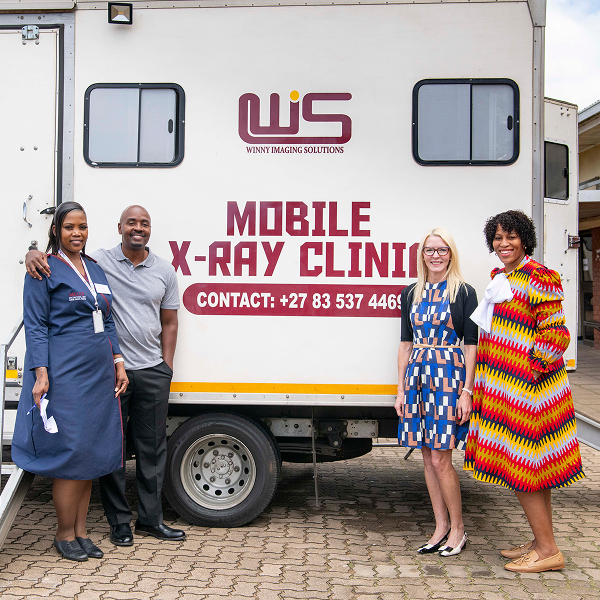
Revolutionizing lung cancer care and early screening in LMICs
Despite being the leading cause of cancer deaths worldwide, lung cancer remains overlooked. From Zambia to Brazil, the Bristol Myers Squibb Foundation supports innovative initiatives to strengthen access to early detection and care.
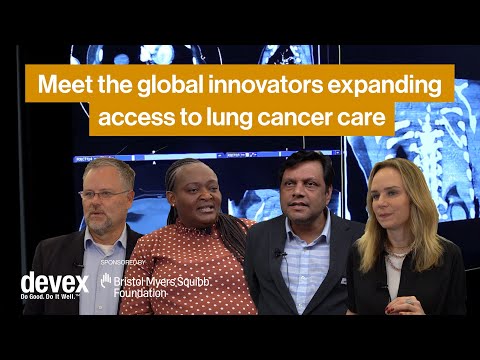
Meet the global innovators expanding access to quality lung cancer care
Lung cancer remains the leading cause of cancer deaths worldwide, yet health systems often struggle to implement effective prevention, screening, and treatment programs The Bristol Myers Squibb Foundation's Multinational Lung Cancer Control Program, or MLCCP, is addressing this gap by funding pilot projects that strengthen health systems, train specialists, raise awareness, and expand access to care. In this video, MLCCP grantees, speaking on the sidelines of the World Conference on Lung Cancer, discuss critical barriers and progress in their countries.

From our grantee partners
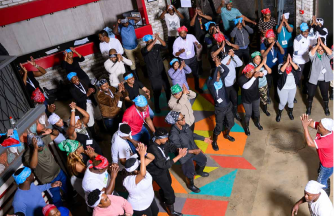
Strengthening cancer care across Africa through partnership
For many cancer patients throughout Africa, the journey to diagnosis and treatment can be long and uncertain. But across the continent, communities and local leaders are working to change that reality. The Bristol Myers Squibb Foundation (BMS Foundation), an independent charitable organization, is proud to support many of these changemakers by strengthening cancer care systems and improving access to quality care, closer to home.

Expanding access to lung cancer screening
Every November, the U.S. commemorates Lung Cancer Awareness Month to educate Americans about the risks they face and the steps they can take to protect their health. This November brings renewed hope to the fight against lung cancer because the public health community has the tools they need to turn the tide – and they are already seeing the results in action.
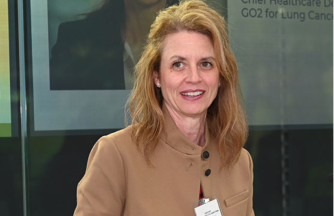
Equipping providers for lung cancer care in underserved communities
Hundreds of thousands of lung cancer patients and their families rely on their healthcare providers to learn about the best possible care options. Thanks to major breakthroughs in prevention, early detection and treatment, recent decades have brought new hope to many patients.

'This is not your parents' lung cancer'
Lifelong Kentuckian Rochelle Waddell loves the Bluegrass State. But she definitely doesn't love that it leads the nation in smoking rates, lung cancer incidence, and lung cancer deaths. "Kentucky has been No. 1 in these terrible
Join the Conversation
What are the complex challenges in global health that require system-wide solutions? How can we better strengthen health systems and build capacity for early lung cancer detection worldwide?
Follow us on social media and tell us what solutions you are hearing about in the fight against lung cancer.


FAQ
Devex is the media platform for the global development community. A social enterprise, we connect and inform over one million development, health, humanitarian, and sustainability professionals through news, business intelligence, and funding & career opportunities so you can do more good for more people.
The Bristol Myers Squibb Foundation (BMS Foundation), an independent
charitable organization funded by BMS, is focused on advancing health
equity and dedicated to its mission to improve global health. By
empowering local communities to create lasting impact, the BMS
Foundation’s vision is for a future where all people, regardless of where
they live, can achieve their best possible health through strong local
healthcare systems. It invests in capacity building and health systems
strengthening programs to expand access to care for medically underserved
populations in the geographies where it is focused, including Brazil,
India, sub-Saharan Africa, and the United States.
Through its
strategic grantee partners and locally led solutions, the BMS Foundation
advances innovative approaches that ultimately improve patient outcomes
and promote health equity worldwide. For more information, visit
bms.com/foundation.