|
Presented by The Pfizer Foundation | Who's running Trump's global health overhaul at State now?
|
|
|

|
|
||||
|
USAID may be no more, but its presence is still being felt. In fact, it could get a coveted international recognition of its work — ironically, the same recognition coveted by the man who dismantled the agency. Also in today’s edition: The U.S. has committed billions to a new global health model. But staff departures raise concerns about adequate levels of technical expertise. Meet the key players tasked with making the strategy work.  How do you give $100 million to feminist groups most funders can’t reach? Tomorrow, Oct. 29, at 8:30 a.m. ET, we’ll hear from the Global Fund for Women’s PeiYao Chen about how that money moves, and what funders can take back to their own portfolios. Register here. 
|
|
From pariah to prize
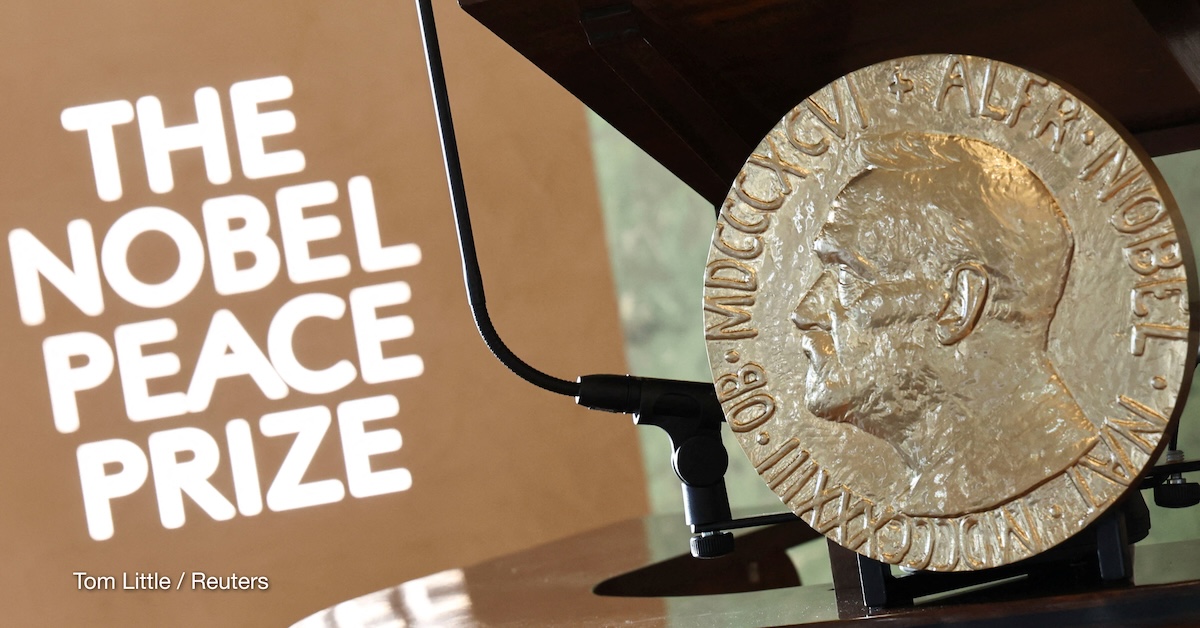
Here’s a twist few people would have predicted a couple of years ago: USAID has been nominated for the Nobel Peace Prize. And the nomination comes from someone who knows a thing or two about the award: Ellen Johnson Sirleaf, Liberia’s former president and a Nobel Peace Prize laureate herself. In her letter to the Nobel Committee obtained by Devex, Sirleaf makes the case that USAID’s 63-year history of fighting disease, preventing famine, supporting democracy, and helping countries recover from conflict makes it a worthy contender. She draws on her own experience leading Liberia through the aftermath of civil war and the 2014–2016 Ebola crisis, arguing that USAID was instrumental in helping her government navigate those challenges. “I can think of no more worthy recipient of the Nobel Peace Prize,” she writes. The nomination also has the backing of David Beasley, former executive director of the World Food Programme, who credits USAID with helping WFP save lives and prevent famine — and argues that recognition could help revive the agency’s work. But there’s a rather extraordinary irony here. As one source who spoke on condition of anonymity pointed out, the same agency that the Trump administration branded a criminal organization is now being put forward for the world’s most prestigious peace prize. It’s also the same prize President Donald Trump has repeatedly said he himself deserves. It would be quite the turnaround if the agency he got rid of nabbed the Nobel — even if a nomination is a long way from winning. |
|
A message from The Pfizer Foundation
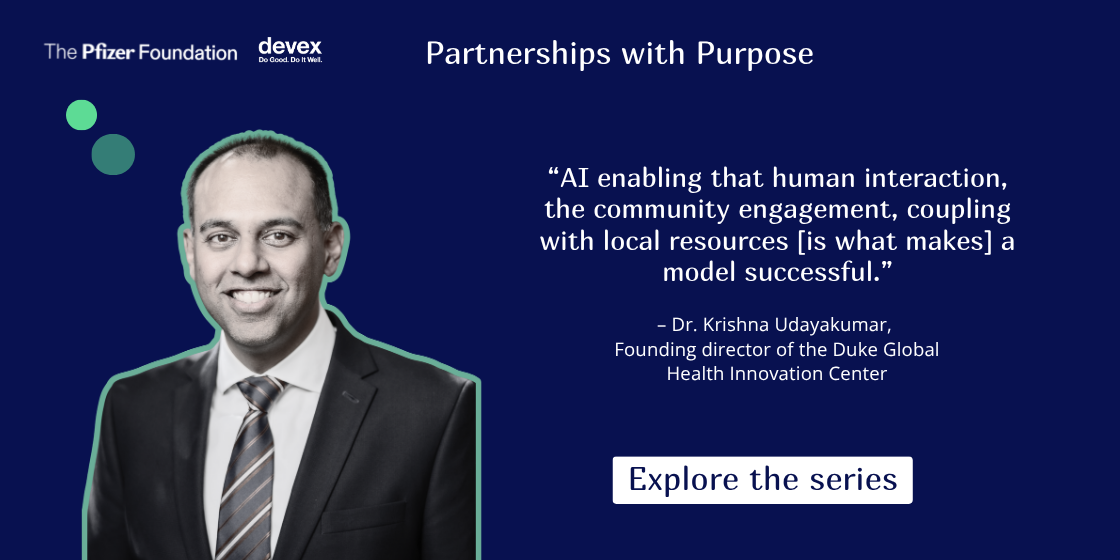
Partnerships with Purpose: Supporting Community-Led Global Health Solutions Communities understand their health challenges best. By collaborating with trusted organizations, The Pfizer Foundation supports initiatives rooted in local knowledge to help improve access to care, strengthen health systems, and drive long-term equity. Explore Partnerships with Purpose to discover how community-based partnerships are helping build healthier communities around the world. |
|
All the president's health men
The Trump administration has signed more than $16 billion in bilateral global health deals, brought private companies and faith-based groups deeper into the fold, and handed the State Department responsibility for an enormous portfolio once shared with USAID. But who’s actually running this new global health operation — and do they have adequate expertise to pull it off?
That’s the question hanging over the America First Global Health Strategy. The administration is moving fast, but with USAID dismantled, the Centers for Disease Control and Prevention staffing slashed, and experienced officials leaving, there are growing concerns about whether the State Department has the people and technical know-how to deliver on its ambitious promises. And the personalities behind the strategy tell quite a story. There’s Brad Smith, a former healthcare entrepreneur and Department of Government Efficiency, or DOGE, official who’s one of those driving the rollout at what one source calls a “high-octane pace.” Jeffrey Graham, a career diplomat, is leading the global health team in an acting capacity. And Andrew Veprek, an immigration hardliner, has replaced Jeremy Lewin at the helm of foreign aid, raising fresh questions about the direction of U.S. health assistance. But there’s also a deep bench of experienced global health professionals. Dr. Mamadi Yilla, a nearly three-decade veteran of HIV, tuberculosis, malaria, and health security programs, is considered particularly important following the departure of Dr. Rebecca Bunnell, whose technical expertise and institutional knowledge earned widespread praise. Hillary Carter brings health security experience, Ingrid Katz serves as acting chief science officer, and James Maloney brings years of experience managing the President’s Emergency Plan for AIDS Relief supply chains, and carries over USAID expertise to the State Department. But the question isn’t simply who’s making decisions in Washington, writes Senior Reporter Sara Jerving. It’s whether there’s enough expertise on the ground at the embassy level to turn billions of dollars in agreements into functioning, effective health programs. “That’s my biggest concern: What’s happening at the embassy levels, not in D.C.,” one source tells Sara. “It’s a very, very nuanced, intricate process — but I don’t think at the country level everybody has their hands around it yet.” The administration has laid out an ambitious new model for U.S. global health assistance. Now comes the harder part: demonstrating that it actually works. Read more: Meet the team behind the America First Global Health Strategy 
|
|
Special notice
The latest in the UN secretary-general race
For the latest episode of our podcast series, David Ainsworth sits down with Anna Gawel and Colum Lynch to discuss the top global development stories of the week, including the twists in the race to lead the U.N. |
|
A big DOGE departure
Jeremy Lewin has departed the State Department, announcing on social media yesterday that he will be returning to the private sector after “the privilege of a lifetime” working with Trump and Secretary of State Marco Rubio.
Lewin was once a staffer at DOGE, Elon Musk’s budget-slashing office that led the dismantling of USAID. He left that role to lead the State Department’s foreign assistance bureau — but in August of this year, Lewin transitioned to a dual-hatted role within the department. He spent two months in that position, which included serving as director of policy planning under Rubio. “I’m eternally grateful for their trust in me to execute their foreign policy vision,” Lewin posted on X, referring to Trump and Rubio. “I look forward to supporting the Administration as a private citizen.” Lewin, now 29, was the youngest-ever director of policy planning at the State Department. In his post on X, Lewin commended Trump for putting “decades of post-Cold War malaise behind us — permanently transforming U.S. foreign policy to put Americans first, keep them safe, and drive peace and shared prosperity in key regions.” ICYMI: The education of Jeremy Lewin Related: What Jeremy Lewin leaves behind
|
|
Think outside the report
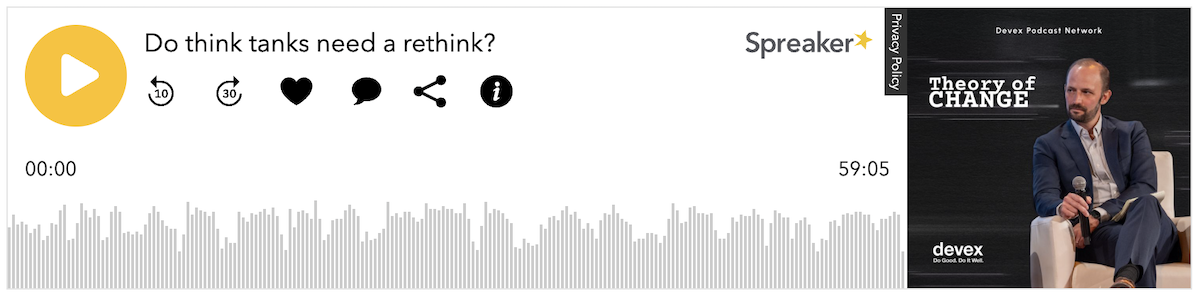
Washington think tanks have a problem: They’re producing mountains of research that the people they’re trying to influence barely have time to read. And Todd Moss, a longtime development think tank leader and founder of the Energy for Growth Hub, thinks it’s time for a rethink. “The top 10 think tanks in the U.S. produced 1,500 reports last year,” Moss tells Senior Reporter Michael Igoe in the latest episode of the Theory of Change podcast. “Some of them have real nuggets of wisdom, but lots of them are just incredibly boring and pointless, and no one will read them.” His argument? If you actually want to change policy, stop measuring success by how many reports you publish and start thinking about what decision-makers need. That means short, sharp memos; political-savvy experts; the right allies; and a great deal of patience. And Moss has a pretty compelling example. His organization spent seven years helping persuade the World Bank to lift its long-standing ban on financing nuclear energy projects — a change many insiders considered impossible. “I was literally told, you will never be able to change this. We will never do this,” Moss says. “When I think about lessons from this, I think about tactics, alliances, and patience.” The bigger lesson? Good research doesn’t change policy simply because it exists. Someone has to make sure it reaches the right people, at the right moment, in a form they’ll actually use. Listen: Do think tanks need a rethink?  You can also listen to the full conversation on Spotify, Apple Podcasts, SoundCloud, YouTube, or search “Devex” in your favorite podcast app. |
|
Special notice
Grants and equity: The Philips Foundation model
Join us for a Devex Pro Funding Briefing on Nov. 19 with Bahaa Eddine Sarroukh to explore when the foundation gives grants and who gets investments, and how they use grants and equity to fund global health. |
|
Out with the old playbook
Knowing when to abandon a strategy might be just as important as knowing how to develop one. And for leaders in the development sector, that’s a rather uncomfortable shift.
Years of experience, a strong track record, and expertise in a particular field are no longer necessarily enough. Foreign aid cuts, new funding models, and the rapid rise of AI are forcing organizations to rethink what they need from their leaders — and how they identify them. “We’re seeing that that one-to-one match is just not as easy to make anymore,” said Christen Brandt of Renaissance Philanthropy during a recent Devex Career Briefing. So what are employers looking for? According to Brandt and Kim Kucinskas of Humentum, it’s less about having done the job before and more about whether you can navigate whatever comes next. That means thinking like an entrepreneur, building partnerships, finding new funding sources, and knowing when to ditch a strategy that isn’t working. It also means understanding AI well enough to judge its opportunities and risks, even if you couldn’t write a line of code yourself. And perhaps most importantly, leaders can no longer afford to operate in silos. They need to understand how everything, from fundraising and finance to security and program delivery, fits together — and how their organization fits into a rapidly changing sector. But there’s a catch. These aren’t necessarily skills that can be picked up in a three-day training course, writes Emma Smith for Devex. They take time, experimentation, and a willingness to admit you don’t have all the answers. The takeaway? Tomorrow’s development leaders won’t necessarily be the people with the longest track records. They’ll be the ones who can adapt when the rules change — and bring their teams along with them. Read and watch: The leadership skills global development employers are looking for 
|
|
In other news
Experts urge the World Health Organization to declare climate change a global health emergency, warning that climate-related health risks have accelerated over the past decade. [Euronews] Human rights groups urge countries to oppose United Arab Emirates diplomat Lana Nusseibeh’s bid to become U.N. secretary-general, citing allegations that the UAE has funded paramilitary forces in Sudan. [France 24]
|
|
Thank you for reading today’s Newswire, edited by Rumbi Chakamba, copy edited by Florence Williams, and produced by Yula Mediavillo. Have a news tip? Email [email protected].
Forwarded by a friend?
Sign up here to receive the Newswire directly.
|
|
Devex thanks our partners for supporting our newsletters.
Our editorial content remains independent. Interested in partnering with us? Get in touch.
Would you recommend our content?


|
|
Connect with us:
|


