|
Presented by International Monetary Fund | New candidates enter the race for WHO leader.
|
|

|

|
|
||||
|
Is there such a thing as too much money in today’s aid-starved environment? Yes, and you want to be cautious of it, according to Ken Isaacs of the American-based Evangelical humanitarian organization Samaritan’s Purse. Also in today’s edition: The race for the next WHO leader heats up, while a pandemic political declaration falls flat.  Join us on Oct. 6 for a Devex Pro Funding Briefing with Sheena Agarwal of Myriad USA for a guide on how international organizations can access U.S. philanthropic funding. Save your spot now. 
|
|
Get your bag
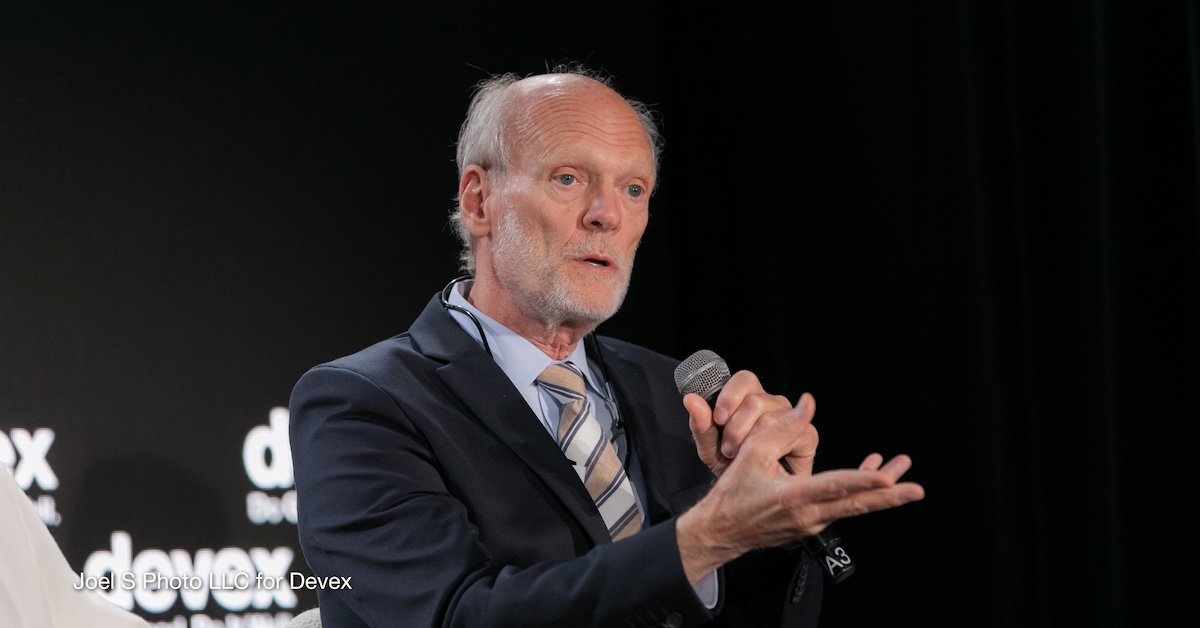
Nothing in life is free — and that includes government foreign assistance because it can lead to a dangerous dependence on money that may not materialize or could be yanked back. “What I hear in the community is a bemoaning of the dissolving of [the U.S. Agency for International Development] — the disappearance of that budget — but also at the same time hear an urging to reconstruct that which existed before,” Isaacs, vice president of programs and government relations at Samaritan’s Purse, said at a Devex Impact House panel on the sidelines of the 81st U.N. General Assembly. But if government funds comprise a large portion of an organization’s donor base, it creates vulnerability — because that funding “can change just like that,” he said. Samaritan’s Purse was recently invited by the U.S. State Department to participate in a macro grant funding agreement of $300 million. The organization turned it down, saying they prayed on the question and would rather rely “on God, not government, for funding.” The organization depends on private donations and doesn’t “chase money,” Isaacs explained, but will accept government funds when it decides it can foster greater impact. Isaacs noted that the organization took its first grant from USAID in 1994 during the Rwandan genocide. “We realized that when you start taking money … the donor has an influence on you,” he said. “We recognized that there was inherent vulnerability in getting too much money from any one donor.” Read and watch: ‘Inherent vulnerability’ in too much government funding, Samaritan’s Purse says 
|
|
A message from International Monetary Fund
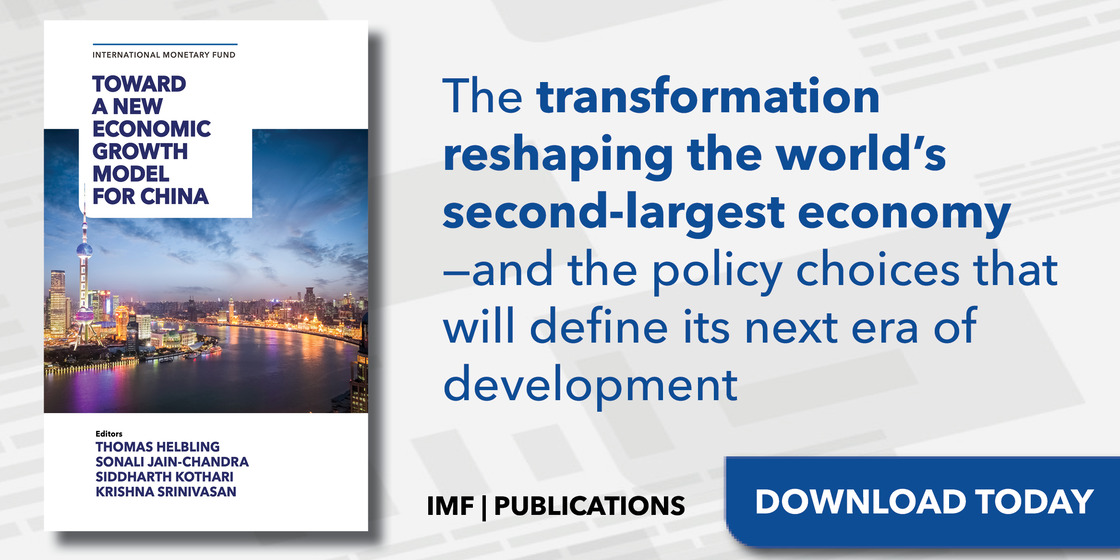
Toward a new economic growth model for China: A reform agenda for balanced, inclusive growth China's economic transformation carries consequences for economies across Asia and beyond. Drawing on IMF staff research, “Toward a New Economic Growth Model for China” lays out a reform agenda for balanced, inclusive growth: consumption, services, innovation, the green transition, and modernized fiscal, monetary, and financial frameworks. A grounded look at the policy choices shaping China's next era. |
|
Macro economics
Not everyone is turning down government money, of course.
In June, Catholic Relief Services received the first in a select series of macro awards from the State Department. That amounted to $240 million in humanitarian aid for countries such as Ethiopia, Haiti, and Sudan. And in July, the organization received $235 million from the U.S. Department of Agriculture — money slated to bring American-grown agricultural commodities to Ethiopia and Sudan. “Our focus is what it’s always been: it’s on the people we serve, not on the organization,” said Sean Callahan, president and CEO of CRS, who spoke at Devex Impact House. That meant building relationships with the Trump administration and Republicans in Congress. “[We took] off the rearview mirror,” Callahan said. “A lot of people were looking back at what could have been, or were upset at different things, and we said: We are not going to get into any battles online, [or join any] sign-on letters and things. We’re just going to show them what we can do, and we’re going to market ourselves better.” Despite the influx of cash, it’s shorter-term funding for an organization that had to shed a third of its staff because of U.S. aid cuts. “Everyone says: ‘Wow, you’re doing well this year,’” Callahan said. “Yeah, well, we’ve got to get prepared for next year, because it may be gone.” Read: How did Catholic Relief Services go from deep cuts to macro awards?
How to get away with merger Many assumed that a controversial merger between UN Women and the U.N. Population Fund might move forward at UNGA last week, or at least be mentioned. Instead, not a peep, leaving questions swirling about the two agencies’ fates. “There are a lot of voices that are saying, it seems that [the merger] is not going forward, and that it’s dead,” Maria Antonieta Alcalde Castro, the director general of the International Planned Parenthood Federation, told my colleague Elissa Miolene. “We’re watchful because we think that these plans may continue. But we were expecting that this would be the moment — and so far, nothing.” A spokesperson for UNFPA told Devex that a joint proposal from the two agencies — which outlined alternatives to a merger — was shared with member states before UNFPA’s latest executive board meeting in late August. The process, the spokesperson said, “is now in the hands of the Secretary-General and the Member States.” UN Women did not comment, but at the agency’s latest executive board meeting, the board acknowledged they were “not in a position to make a recommendation of support” on a merger, adding that “the protection of mandates cannot be guaranteed.” “There are a lot of questions out there, because whatever scenario this takes, there are going to be costs upfront or costs on the backend,” said Nabeeha Kazi Hutchins, the president of reproductive rights advocacy organization PAI. “But the bigger piece is the alignment of objectives and the programming. And answering the question: What will no longer happen? That question has not been answered.” Read: Silence at UN General Assembly leaves UN Women-UNFPA merger plan in limbo
|
|
Sponsored by Eleanor Crook Foundation
Ghana's nutrition reset: From donor dependence to government-owned care
What does it take to ensure all children and pregnant women receive the nutritional care they need, for decades to come? In a new visual story, Devex explores how Ghana is building a lasting, government-owned system for delivering lifesaving malnutrition interventions to pregnant women and malnourished children. |
|
Expanding field
The field for the director-general job at the World Health Organization just got bigger, my colleague Jenny Lei Ravelo reports.
Botswana has nominated Dr. Gevorg Tamamyan, according to WHO’s list of candidates for the position. Tamamyan’s nomination stands out from those of the other candidates, who were nominated by their home countries. While Botswana put his name forward, Tamamyan is Armenian. Tamamyan’s nomination follows former WHO director Dr. María Neira’s entry into the race. Neira, who is known for her work on climate change and health, was nominated by Spain. Tamamyan is the third candidate from WHO’s European region, alongside Neira and Dr. Hans Kluge. The other candidates vying for the top WHO job are Hanan Mohammed Al-Kuwari, former health minister of Qatar; Dr. Hanan Balkhy of Saudi Arabia; and Budi Gunadi Sadikin, health minister of Indonesia. Read: Botswana nominates Armenian oncologist for WHO director-general job Insider track Balkhy is regional director of the WHO regional office for the Eastern Mediterranean, though she’s on leave to pursue her WHO director-general candidacy. At Devex Impact House, her message was simple: WHO needs to prioritize its mandates, focusing on areas it does best and identifying areas where others can lead. She said that while there are a lot of requests from member states, it doesn’t mean that WHO “should be doing it ourselves all the time.” “Those are some of the things that we have to be very clear-minded on. What is our mandate? Who can do it? If it’s not us and we don’t have the funding to do it, what is the best second option for it to be done?” she said. “There’s always solutions to support the member states.” Read and watch: We have to be ‘very clear-minded’ on WHO’s mandates, says Dr. Hanan Balkhy ICYMI: WHO needs unconventional leadership, says candidate Budi Sadikin
|
|
Sponsored by GSMA
Breaking barriers: How to close the world’s usage gap
Ninety-six percent of the world’s population lives within reach of mobile broadband, yet 3.1 billion people still aren’t online. Affordability, digital skills, safety, local content, and basic enablers stand in the way. GSMA is calling on policymakers and industry to act together, unlocking education, healthcare, and financial services for billions, and up to $3.5 trillion in global GDP by 2030. |
|
Unprepared
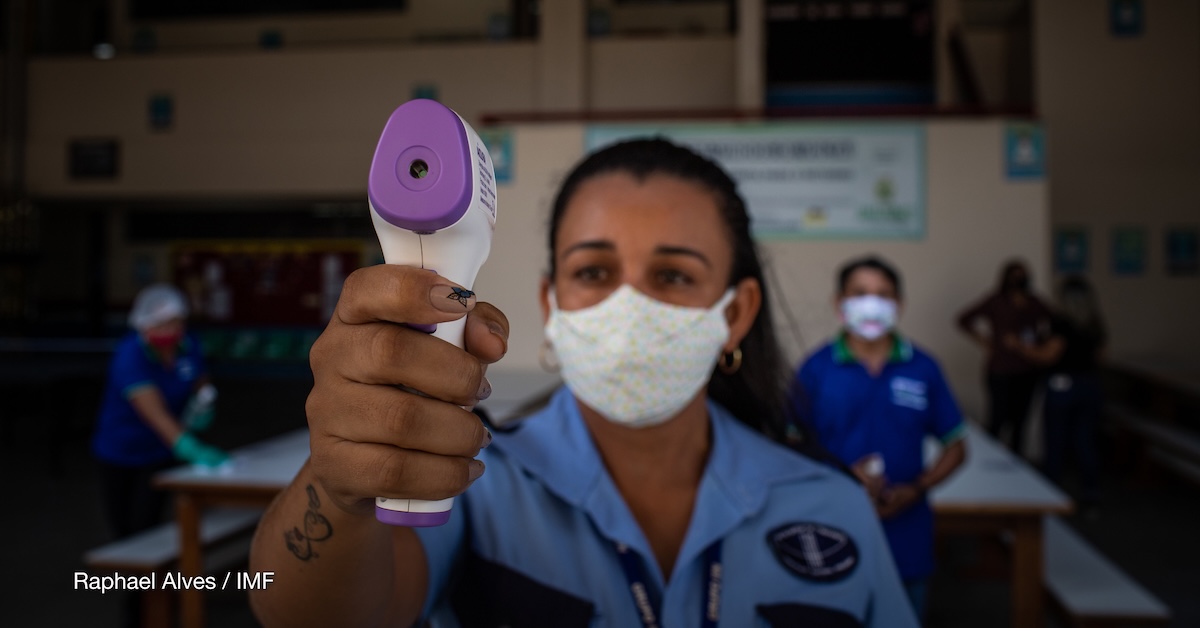
A political declaration aimed at strengthening the world’s defenses against future pandemics failed to secure unanimous support at a high-level meeting Friday after the United States and European Union raised concerns over parts of the text. The declaration will still head to the U.N. General Assembly for a vote, though the assembly’s president acknowledged reservations, my colleague Rumbi Chakamba reports. For the U.S., objections include what Dr. Erica Schwartz — director of the U.S. Centers for Disease Control and Prevention — described as “divisive ideologies that lack definitional consensus,” as well as references to ongoing negotiations over a pathogen access and benefit-sharing system, or PABS, the contentious annex of the WHO’s Pandemic Agreement that is yet to be finalized. On the other side, Hadja Lahbib, speaking on behalf of the EU and its member states, said “explicit red lines” for the bloc remain. The EU says technology transfer must be voluntary and on mutually agreed terms. It also argues that the declaration’s emphasis on health sovereignty, domestic financing, and reducing aid dependency should be balanced by recognition of the role of international financing. Helen Clark, former prime minister of New Zealand and co-chair of the Independent Panel for Pandemic Preparedness and Response, said it was “disappointing” that the meeting was not asked to endorse the declaration. “Agreeing to collaborate to prevent, prepare for, and respond to pandemics should not be controversial.” Read: US and EU push back on parts of UN pandemic declaration In other news The European Union has announced 710 million euros ($810 million) to support displaced and vulnerable populations around the world. [Al Jazeera] The U.K. will reopen a refugee resettlement scheme with priority for vulnerable Afghan women and girls and Palestinians, giving them a faster path to permanent residency. [The Guardian]
|
|
Thank you for reading today’s Newswire, edited by Fiona Zublin, copy edited by Nicole Tablizo, and produced by Yula Mediavillo. Have a news tip? Email [email protected].
Forwarded by a friend?
Sign up here to receive the Newswire directly.
|
|
Devex thanks our partners for supporting our newsletters.
Our editorial content remains independent. Interested in partnering with us? Get in touch.
Would you recommend our content?


|
|
Connect with us:
|


